
Trees
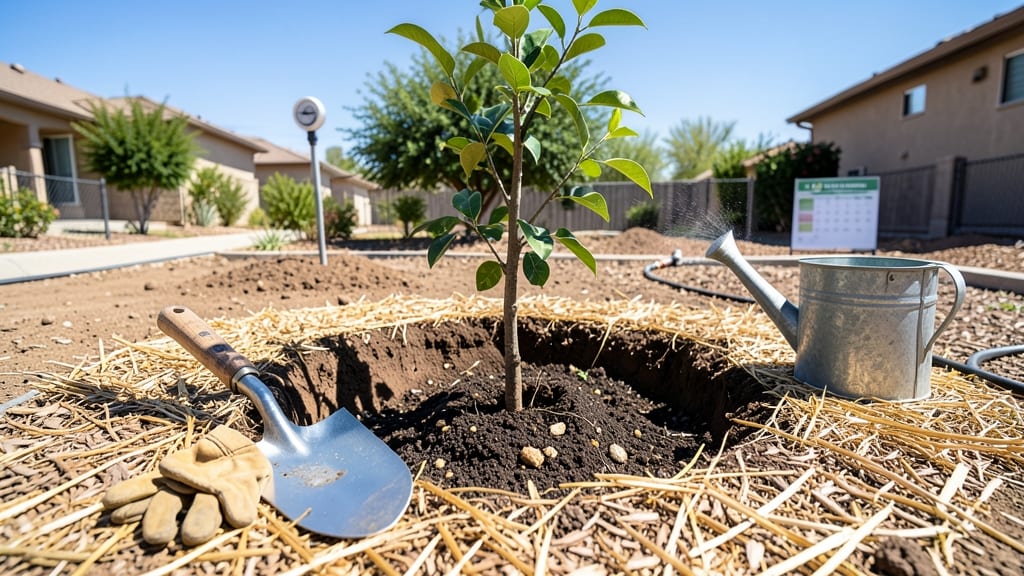
Timing matters more than you think when planting fruit trees in Arizona—get it wrong, and your 🍎 could struggle to survive the brutal summer heat. The key to success? Planting during Arizona’s cooler months when roots establish before the desert sun peaks.
Most gardeners assume spring is the best time, but Arizona’s climate demands a different approach. Fall and winter offer ideal conditions—soil stays workable, temperatures are mild, and trees can focus on root growth instead of battling heat stress.
This is your chance to set up fruit trees for years of healthy harvests.
Whether you’re planting citrus in the Low Desert or figs in the High Desert, the optimal window runs from November through February. We’ll break down exactly which months work best for your specific region and how to prepare soil for maximum root development.
Ready to avoid common mistakes and give your fruit trees the best possible start? Let’s dive into the proven strategies that work in Arizona’s unique growing conditions.
Best fall planting months for Arizona fruit trees by region
Arizona’s diverse climate—from the Low Desert’s triple-digit summers to the High Desert’s cooler nights—means planting fruit trees requires precision. The ideal window spans September through November, but exact timing depends on your region’s microclimate and frost risks.
In the Low Desert (Phoenix, Tucson), aim for October–November to avoid summer’s brutal heat, while High Desert (Flagstaff, Prescott) gardeners can plant as late as December thanks to milder temperatures.
Why fall? Cooler temps reduce transplant shock, and rainfall increases in late fall, giving young roots a head start. However, Mountain regions (above 6,000 ft) face earlier frosts—plant by September to avoid winter damage.
Always check your USDA Zone (8a–11) and local frost dates (e.g., Phoenix’s last frost is January 15, but Flagstaff’s can hit November 15).
| Region | Best Planting Months | Soil Prep | Microclimate Tips |
|---|---|---|---|
| Low Desert (Phoenix, Tucson) | October–November | Amend with compost; ensure well-draining soil | Avoid reflective surfaces (concrete); use drip irrigation |
| High Desert (Flagstaff, Prescott) | September–December | Add organic matter; test pH (6.0–7.5) | Mulch heavily to insulate roots; watch for early frosts |
| Mountain Regions (Sedona, Payson) | September–October | Improve drainage; avoid clay-heavy soil | Choose cold-hardy varieties (e.g., apple, pear) |
For container-grown trees, fall planting is even more critical—they establish roots faster in cooler weather. If you’re in the Low Desert, prioritize citrus (lemon, lime) or figs, which thrive in heat but need protected roots during winter.
In the High Desert, peaches and apricots love the cooler nights but require windbreaks to prevent frost damage.
Pro tip: Acclimate bare-root trees for 1–2 weeks before planting by soaking roots in water mixed with mycorrhizal fungi. This boosts root growth by 30% in Arizona’s alkaline soils. Always plant on a cloudy day or in the late afternoon to minimize transplant shock from direct sun.
Regardless of region, avoid planting in spring—Arizona’s summer heat can kill young trees within weeks. Instead, let them root deeply over winter and flower in spring, setting the stage for a bountiful harvest.
For container planting, use fabric pots to prevent root circling and ensure drainage holes.
One common mistake? Overwatering in fall. While rain increases, soggy soil suffocates roots. Water deeply once a week unless rains exceed 1 inch. Use a moisture meter to check—60–70% soil moisture is ideal for new plantings.
If you’re in Zone 10–11 (e.g., Yuma, Saguaro National Park), year-round planting is possible, but fall remains best for stone fruits (peaches, plums). These trees dormant-plant better and produce fruit 1–2 years sooner than spring-planted trees.
For dwarf varieties, timing is even more flexible—plant them anytime fall (October–December) since they recover faster from transplanting. Pair them with pollinators (e.g., fig wasps for figs) to ensure fruit set. Always prune dead branches before planting to redirect energy to root growth.
Remember: Arizona’s soil is alkaline (pH 7.5–8.5), which can lock out nutrients. Before planting, amend with sulfur to lower pH to 6.0–7.0 for optimal iron and zinc uptake. This is especially critical for citrus, which suffer from chlorosis in alkaline conditions.
🌱
Best fall planting months for Arizona fruit trees by region
Arizona’s diverse climate—from the Low Desert’s 110°F summers to the High Desert’s cooler winters—means planting windows vary dramatically. The ideal fall months for fruit trees depend on your region, with November through January offering the best balance of mild temperatures and moisture.
In the Low Desert (Phoenix, Tucson), aim for November to early December before winter rains begin. For the High Desert (Prescott, Flagstaff), stretch planting into late December or January to avoid early frosts.
Microclimates play a huge role. Mountain regions (Sedona, Payson) can experience frost as early as November, so wait until late December or January when soil temps stabilize above 50°F.
Always check your local USDA Zone (8a-11) and last frost date—Arizona’s Low Desert rarely sees frost, while higher elevations may face light freezes. Planting too early in cooler zones risks root shock from sudden cold snaps.
| Region | Best Planting Months | Soil Prep Tip | Key Consideration |
|---|---|---|---|
| Low Desert (Phoenix, Tucson) | November – Early December | Amend with compost + sand for drainage | Avoid summer heat; use drip irrigation |
| High Desert (Prescott, Flagstaff) | December – January | Test for pH 6.0-7.5; add lime if needed | Watch for early frost risks |
| Mountain Regions (Sedona, Payson) | Late December – January | Mulch heavily (4-6 inches) to insulate roots | Plant after last frost (typically Jan 15) |
Soil preparation is non-negotiable in Arizona’s alkaline soils. Before planting, test your soil’s pH—most fruit trees thrive in 6.0-7.5.
If your soil is too alkaline (common in the desert), amend with elemental sulfur or composted manure. Citrus and figs tolerate slightly acidic soil, while peaches and apricots prefer neutral pH. Always loosen soil to 18 inches deep to encourage root penetration, and mix in organic matter like leaf mold or coconut coir to retain moisture.
Container-grown trees (bare-root or potted) outperform balled-and-burlapped trees in Arizona’s heat. If planting in containers, use fast-draining mixes with perlite or pumice, and water deeply 2-3 times weekly during establishment.
For in-ground planting, dig a hole twice as wide as the root ball but no deeper—this prevents root suffocation from buried soil. Gently tease out circling roots before backfilling with native soil mixed with compost.
Watering strategy in the first 30 days is critical. Deep water 2-3 times per week (10-15 gallons per tree) to encourage root growth downward, not upward. Use drip irrigation or soaker hoses to keep moisture consistent—Arizona’s dry winds evaporate surface water quickly. Avoid overhead sprinklers, which can spread fungal diseases like brown rot in stone fruits. Mulch with wood chips or straw to lock in moisture and regulate soil temperature.
Timing your planting with Arizona’s monsoon season (July-September) can backfire—avoid planting during or immediately after rains, as waterlogged soil suffocates roots. Instead, wait until after the monsoon (October) when temperatures drop and humidity decreases.
If you miss fall, spring planting (March) is your second-best option, but young trees will struggle through the first summer without deep roots. For citrus and figs, winter planting (December-January) is ideal—they’ll bloom and fruit sooner in the mild desert climate.