Plants
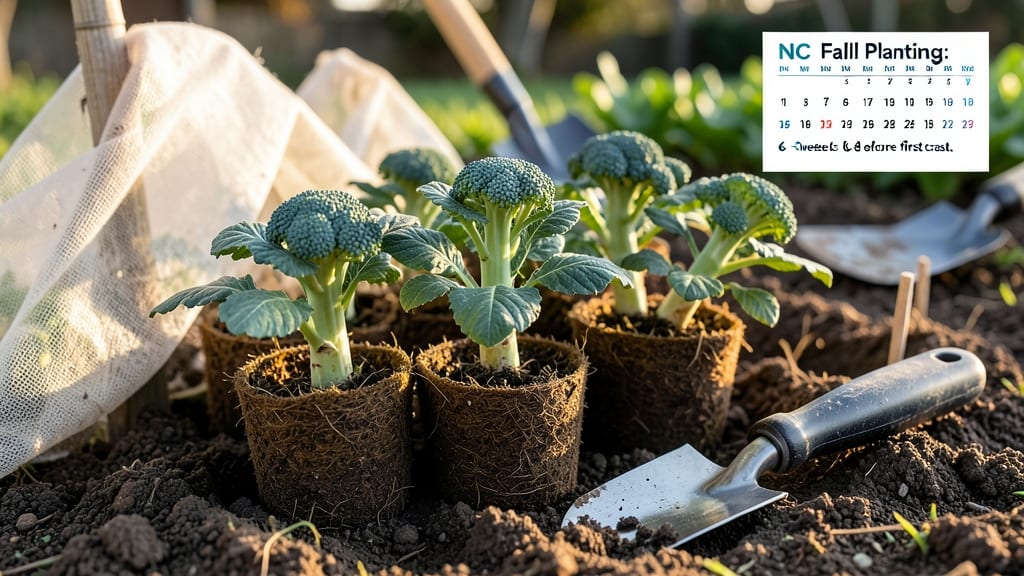
Optimal north Carolina fall planting dates for broccoli by region
North Carolina’s diverse climate means your broccoli planting dates depend heavily on your region. The state spans USDA zones 7a-8b, with Coastal, Piedmont, and Mountain areas each requiring slightly different timing to avoid premature bolting or frost damage.
Let’s break it down by zone so you can plant with confidence.
For all regions, aim to plant 4-6 weeks before your first frost date. This ensures your broccoli matures before winter’s chill sets in.
In NC, the first frost typically arrives between mid-October and early November, but mountain areas freeze earlier than coastal zones. Soil temperature should be above 45°F (7°C) for successful germination.
Here’s the critical planting window for each NC region, including the best transplant dates and seed-starting windows if you’re growing from seed:
| Region | First Frost Date | Best Transplant Window | Seed-Starting Window | Soil Temp Threshold |
|---|---|---|---|---|
| Coastal (e.g., Wilmington, Morehead City) | Early November | Late September to early October | Mid-August to mid-September | 45°F (7°C) |
| Piedmont (e.g., Raleigh, Greensboro) | Mid-October | Early to mid-September | Late July to early September | 45°F (7°C) |
| Mountains (e.g., Asheville, Boone) | Early October | Late August to early September | Late July to mid-August | 40°F (4°C) (cooler tolerance) |
If you’re starting seeds indoors, mountain gardeners should begin by late July to ensure seedlings are ready for transplant by early September. Piedmont gardeners have a slightly longer window, while coastal gardeners can wait until mid-August for seed-starting. Transplant shock is less of an issue in cooler fall soil, so hardened-off seedlings thrive.
Pro tip: Use a soil thermometer to confirm temperatures. Broccoli seeds won’t germinate well below 45°F (7°C), even in cooler zones like the Mountains. If soil is too cold, wait a week or two—patience prevents bolting later.
For extended harvests, consider succession planting in the Piedmont and Coastal regions. Plant a second batch in late September (if frost isn’t imminent) to enjoy broccoli through December or January. Just cover young plants with row fabric if frost threatens.
One common mistake? Planting too late in the Piedmont or Mountains. If you miss the early September window, your broccoli may bolt before forming heads. Coastal gardeners have more flexibility due to milder winters, but don’t push it past early October.
Remember, broccoli needs consistent moisture to develop sweet, tender heads. In NC’s fall, rainfall often tapers off by October, so plan for supplemental watering—especially in sandy soils common in the Coastal Plain.
Finally, mark your calendar for harvest time. Most fall-planted broccoli in NC is ready by November, with some varieties lasting into February if protected from hard freezes. Harvest before heads flower—that’s when flavor peaks!
How to adjust planting timing for zero-bolt broccoli in fall
North Carolina’s fall weather can be unpredictable—one day warm, the next chilly. That unpredictability can trigger broccoli bolting (premature flowering) if you’re not careful. The key to avoiding bitter, flower-filled heads lies in adjusting your planting timing based on your microclimate and variety.
Let me break down how to fine-tune your schedule for foolproof fall broccoli.
First, succession planting is your best friend. Instead of planting all your seeds at once, stagger them every 2 weeks from late August through early October. This ensures a continuous harvest window from November through February, even if the weather shifts unexpectedly.
For example, if your first batch bolts due to a sudden cold snap, your second batch might still thrive.
Next, consider seedling age. Younger seedlings (4-6 weeks old) handle cooler fall temperatures better than mature ones. If you’re starting from seed, begin indoors 6-8 weeks before your target outdoor date—this gives you flexibility to adjust based on weather forecasts.
For direct sowing, aim for soil temperatures between 45°F and 85°F—any hotter, and you risk bolting.
🚨 WARNING: Late October plantings are risky unless you’re in the Mountains region or using cold-hardy varieties like 'Waltham 29'. In the Coastal Plain, frost can arrive as early as mid-October, leaving little time for harvest.
Always check your local frost dates and adjust accordingly. A quick Google search for “[your NC county] frost dates” will save you headaches.
Don’t overlook microclimates—your garden isn’t uniform. South-facing beds warm up faster than north-facing ones, while low-lying areas may stay cooler longer. If your yard has shady spots or frost pockets, plant those varieties 2-3 weeks later than your main garden.
For example, if you’re planting 'De Cicco' in full sun by September 15th, delay the same variety in a shady corner until October 1st.
Finally, protect your plants if early frost threatens. Use row covers or cold frames to extend the growing season by 2-4 weeks. This is especially useful in the Piedmont region, where nights can drop below freezing unexpectedly.
A simple floating row cover over your broccoli can mean the difference between a harvestable head and a bolted mess.
With these adjustments, you’ll dodge the bitter bolt trap and enjoy crisp, flavorful broccoli straight from your NC garden all winter long. The secret? Flexibility—watch the weather, know your microclimate, and don’t be afraid to tweak your timeline. 🌱