
Plants
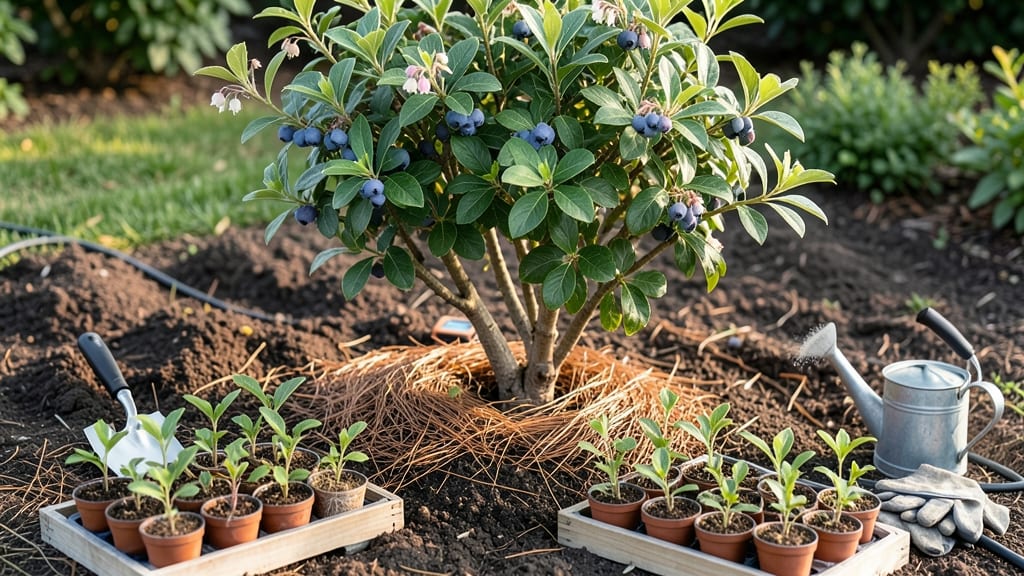
Planting blueberries in Kansas at the wrong time can turn your 🫐 dream harvest into a sad, struggling bush—especially in USDA Zones 6b-7a where frost lingers well into spring.
The key to success isn’t just when you plant, but how you prep your soil and choose the right varieties for Kansas’ unpredictable climate.
Most gardeners assume spring is the only option, but late winter planting (February-April) gives blueberry roots a head start before summer’s heat.
I’ll show you exactly how to time it right, whether you’re working with bare-root plants or container-grown bushes, so your bushes establish strong roots before Kansas’ first frost in November.
You’ll also discover which blueberry varieties thrive best in your region—some handle our alkaline soils better than others—and how to adjust your planting strategy if you’re in a cooler microclimate like western Kansas versus the more moderate eastern areas. Let’s get your blueberries off to the best possible start.
From soil pH adjustments to frost protection tips, I’ve covered all the critical steps to ensure your blueberries not only survive but flourish. Ready to grow your own Kansas blueberries? Let’s dive into the details that’ll make your harvest sweeter than store-bought.
Best planting window for blueberries in Kansas (USDA Zones 6b-7a)
Kansas’s USDA Zones 6b-7a mean blueberries need precise timing—plant too early, and frost will damage tender roots; too late, and they won’t establish before summer heat. The ideal window is late winter to early spring, specifically February through April, when soil temperatures hover around 40-50°F.
This aligns with Kansas’s last average frost date (March 15), giving roots 6-8 weeks to harden before summer stress.
For bare-root plants, aim for February-March when dormancy ends but before buds swell. Container-grown blueberries can stretch into early April, but avoid planting after mid-April—summer’s intensity will stress young plants.
Southern Kansas (Zone 7a) has a slightly longer window, while northern areas (Zone 6b) should prioritize March planting to avoid late frosts.
Soil temperature is your best guide. Use a soil thermometer to confirm 45°F+ at 4 inches deep—this signals root-friendly conditions. In Kansas, this typically occurs by mid-March in most regions.
If planting in fall (not recommended for Kansas), do so 6-8 weeks before first frost—but blueberries struggle with Kansas’s alkaline soil and winter moisture fluctuations, making spring the safer bet.
Microclimates matter! South-facing slopes warm faster, allowing earlier planting, while low-lying areas may need to wait until late March. Urban heat islands (like Wichita) can push planting into early April, while rural areas should stick to March.
Always check your local Kansas State University Extension frost data for precision.
Pro tip: Acclimate bare-root plants for 1-2 hours before planting by soaking roots in water mixed with a rooting hormone. This reduces transplant shock—a critical step for Kansas’s dry spring winds.
After planting, mulch heavily (4-6 inches) with pine straw or wood chips to retain moisture and regulate soil temps.
| Planting Stage | Kansas Timeline | Key Actions | Soil Prep |
|---|---|---|---|
| Late Winter (Feb) | Zone 6b: Mid-Feb Zone 7a: Early Feb |
Test soil pH (aim for 4.5-5.5) Order plants |
Amend with sulfur if pH > 6.0 |
| Early Spring (Mar) | Zone 6b: Mid-Mar Zone 7a: Early-Mar |
Plant bare-root Soak roots 1-2 hrs |
Add compost + peat moss |
| Post-Planting (Apr) | Zone 6b: Late Apr Zone 7a: Early Apr |
Mulch 4-6 inches Water deeply |
Monitor moisture (1-2 inches/week) |
| Growth Check (May) | All zones | Fertilize with acid-loving mix Prune dead branches |
Re-test pH if needed |
Kansas’s variable spring weather can throw off timing—always have a backup plan. If a late frost hits after planting, cover young plants with frost cloth until temps stabilize.
Conversely, if drought arrives early, drip irrigation is a lifesaver for Kansas’s low-humidity springs. Remember: blueberries are not drought-tolerant, so prioritize consistent moisture over strict schedules.
For container gardening (ideal for urban Kansas gardeners), plant in March-April and use large pots (15+ gallons) with acidic potting mix. Containers warm faster, so monitor soil temps closely—below 45°F can stunt root growth. Place pots in protected microclimates, like near south-facing walls, to extend the season.
First-year plants won’t bear fruit, but proper spring planting sets the stage for harvests in years 2-3.
In Kansas, expect July-August berries from varieties like ‘Bluecrop’ or ‘Duke’, but timing starts now. Mark your calendar for March 15—this is your final deadline for bare-root planting in most of the state.
💧 Pro Tip:
Best planting window for blueberries in Kansas (USDA Zones 6b-7a)
Kansas’s USDA Zones 6b-7a mean blueberries need precise timing—plant too early and frost will damage tender roots, too late and summer heat stress sets in.
My ideal window is late February through April, when soil temperatures reach 40°F (4°C) but before the last frost date (typically mid-March in most areas). This gives roots 6-8 weeks to establish before summer’s peak.
For western Kansas (cooler microclimates), aim for March-April planting to avoid late frosts that can linger into April. Eastern Kansas gardeners have more flexibility, with February-March being ideal. I always check the National Weather Service’s frost predictions for my specific county to fine-tune timing.
Soil temperature is more critical than air temperature—use a soil thermometer to confirm 40°F (4°C) minimum. Cold soil slows root growth, while warm soil (above 50°F/10°C) encourages rapid shoot growth that can stress the plant.
In Kansas, this usually aligns with late February to early April, but verify locally.
| Planting Stage | Kansas Timeline | Key Considerations |
|---|---|---|
| Soil Prep | Late October - Early November | Test pH (4.5-5.5), amend with sulfur |
| Bare-Root Planting | Late February - Early April | Soil 40°F+, avoid frost dates |
| Container Planting | March - Early May | Use acidic potting mix, protect from wind |
| First Frost Protection | Mid-November | Mulch heavily (4-6 inches) |
If you miss the ideal window, early May is your last chance—but expect slower establishment. I’ve had success with container-grown blueberries planted in May, as they adapt faster to heat. For bare-root plants, avoid planting after May 15, or roots won’t harden off before winter.
Kansas’s alkaline soils often need amendments before planting. I recommend adding peat moss or pine fines to planting holes to lower pH naturally. For existing gardens, a soil test kit (available at local extension offices) is worth the investment—blueberries won’t thrive in pH above 5.5.
Pro tip: Plant on a cloudy day to reduce transplant shock. Water deeply before and after planting, and apply 2-3 inches of mulch to retain moisture.
With the right timing and prep, your Kansas blueberries will reward you with years of harvests—not just next summer, but for decades to come. 🌱