
Plants
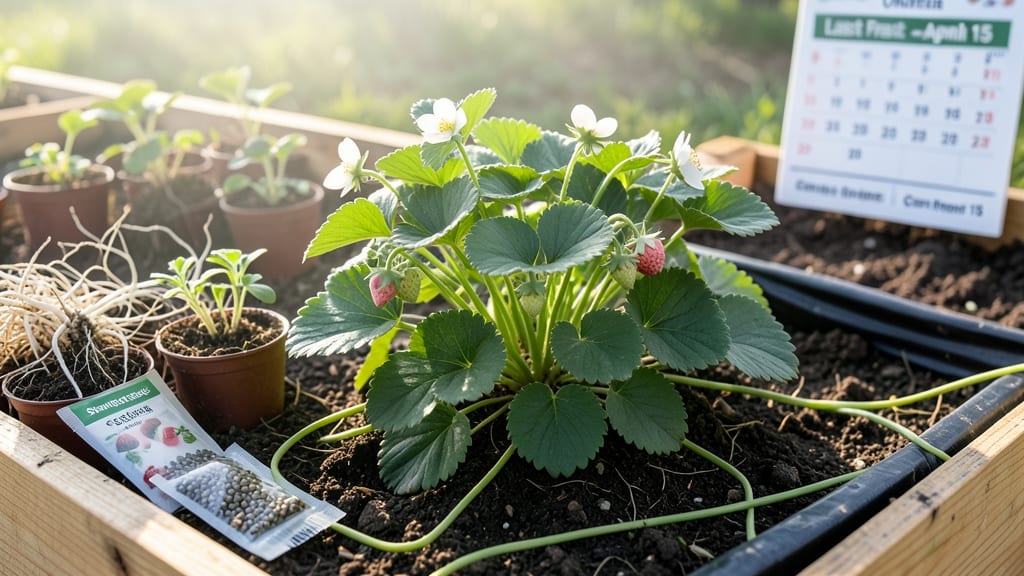
If you’ve ever wondered when to plant strawberries in Ohio, timing is everything—and getting it wrong could mean the difference between a handful of berries and a garden overflowing with 🍓.
Ohio’s Zone 6a climate brings unique challenges, from late spring frosts to early fall chills, but with the right strategy, you can outsmart Mother Nature.
The key to success lies in planting either in early spring (March–April) or early fall (September–October), when soil temperatures and frost patterns align perfectly. Spring plantings give you an earlier harvest, while fall plantings let roots establish before winter—both have their advantages, depending on your goals.
I’ll break down the exact windows, soil prep tips, and frost protection hacks so you can plant with confidence. Whether you’re a first-time gardener or a seasoned grower, these insights will help you maximize your strawberry yield—no guesswork required.
Ready to turn your Ohio garden into a berry paradise? Let’s dive into the best planting times and techniques to set you up for a summer (or fall) full of sweet, homegrown strawberries.
Ohio strawberry planting calendar: best spring vs fall timing for Ohio’s climate zones
Ohio’s USDA hardiness zones 5–7 create a unique challenge for strawberry growers. Unlike southern states, we face late spring frosts and early fall freezes, so timing is everything. Plant too early, and frost will nip tender shoots.
Too late, and your berries won’t mature before summer’s heat stress. Let’s break down the exact windows for Ohio’s two best planting strategies: early spring and early fall.
Most Ohio gardeners swear by spring planting (March–April) because it aligns with the last average frost date (April 15). However, fall planting (September–October) can yield earlier harvests in some regions.
The key? Soil temperature. Strawberries need 40–50°F soil to root properly in fall and 35–45°F in spring. Use a soil thermometer—don’t guess!
Northern Ohio (zones 5–6) has shorter growing seasons and colder winters, so fall planting is riskier. Southern Ohio (zones 6–7) can push fall planting later. For example, Cincinnati gardeners might plant in early October, while Cleveland gardeners should finish by mid-September to avoid winter kill.
Here’s your Ohio strawberry planting timeline by zone and season, with soil temperature thresholds and frost-free windows to maximize success:
| Zone/Region | Spring Planting Window | Soil Temp | Fall Planting Window | Harvest Window |
|---|---|---|---|---|
| Northern OH (5a–5b) | Late April–Early May | 40–45°F | Mid-Sept–Early Oct | June–July |
| Central OH (6a) | Early April–Mid-April | 35–40°F | Late Sept–Early Oct | Late May–August |
| Southern OH (6b–7a) | Mid-March–Early April | 35–45°F | Early Oct–Mid-Oct | May–September |
Notice how fall planting extends harvests in southern Ohio by 2–3 weeks? That’s because plants establish roots before winter and fruit earlier in spring. But in northern Ohio, fall planting is riskier—winter dieback is common if plants aren’t hardened off properly.
For bare-root crowns (the most common type), aim to plant 4–6 weeks before last frost in spring. If you’re using potted transplants, you can push it to 2–3 weeks before last frost since they’re less stressed.
In fall, 6–8 weeks before first frost gives roots time to anchor before winter.
Pro tip: Mulch heavily (3–4 inches of straw) after planting in both seasons. In spring, it insulates roots from late frosts. In fall, it protects crowns from freeze-thaw cycles that heave plants out of the soil. This simple trick can double your survival rate in Ohio’s volatile climate.
Ohio’s microclimates also play a role. If you’re in a valley or low-lying area, expect 2–3°F colder temps than nearby hills. Use this to your advantage: plant fall strawberries in sheltered, south-facing slopes to delay frost exposure.
Now that you’ve got the timing down, let’s tackle the next big question: Spring vs. Fall Planting—Which Ohio Method Wins for Yield? Spoiler: It depends on your patience and risk tolerance.
Spring planting vs fall planting: which Ohio method yields more berries?
Ohio gardeners often debate whether to plant strawberries in spring or fall—and the answer depends on your local microclimate and variety. Both methods work in Ohio’s USDA Zones 5–7, but each has distinct advantages.
Spring planting gives you an earlier harvest, while fall planting lets roots establish before winter. Let’s break down the Ohio-specific pros and cons so you can choose the best strategy for your garden.
For spring planting, aim for 4–6 weeks before your last frost date (typically mid-March to early April in most of Ohio). This gives plants time to develop strong roots before summer heat arrives. However, late spring frosts (common in northern Ohio) can damage early blooms.
In contrast, fall planting (late September to early October) allows strawberries to root deeply before winter, often resulting in larger yields the following year.
Here’s the key trade-off: Spring-planted strawberries may produce fruit in their first year, but yields are often smaller. Fall-planted varieties, like ‘Jewel’ or ‘Honeoye’, typically wait until the second year but deliver more abundant harvests with fewer pests.
Southern Ohio (e.g., Cincinnati) can push fall planting slightly later, while northern areas (e.g., Cleveland) should plant earlier to avoid early frosts.
Spring Planting in Ohio
- Earlier fruit in first year (June–July)
- Avoids fall pests (e.g., slugs, voles)
- Better for day-neutral varieties (e.g., ‘Seascape’)
- Risk of late frosts damaging blooms
- Smaller first-year yields
- Requires more summer watering
Fall Planting in Ohio
- Established root systems by winter
- Larger second-year harvests (August–September)
- Fewer spring pests (e.g., birds, deer)
- No fruit first year
- Winter survival risks (heaving, rodent damage)
- Requires mulching for insulation
If you’re torn, consider a hybrid approach: plant half your strawberries in spring (for early fruit) and half in fall (for next year’s bounty). Ohio State University Extension trials show that fall-planted ‘Chandler’ strawberries often outperform spring-planted ones by 30–40% in yield.
For northern Ohio, prioritize fall planting to avoid frost risks, while southern Ohio gardeners can experiment with both methods.
Remember: Soil temperature is critical. For spring, wait until soil reaches at least 40°F, and for fall, plant when soil is 40–50°F (roots grow best in cool but frost-free conditions). Use a soil thermometer to check—Ohio’s clay-heavy soils can stay cold longer than you’d expect.
Pro tip: If you plant in fall, mulch heavily with straw (3–4 inches) to insulate roots and deter voles. For spring plantings, use row covers in late spring to protect blooms from unexpected frosts. Both methods work in Ohio—it’s all about matching your local frost dates and variety hardiness.