
Plants
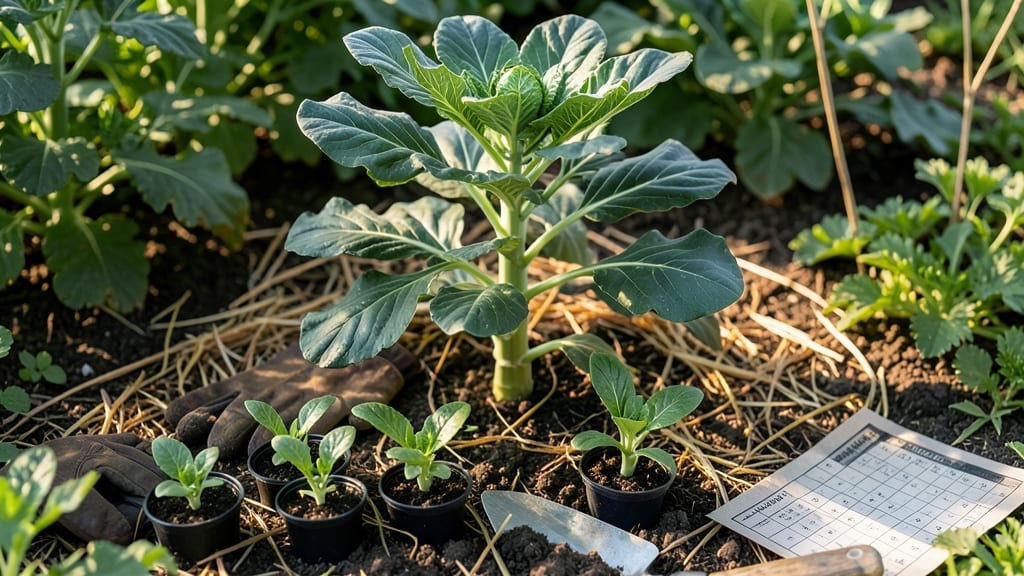
Timing your Brussel sprouts 🥦 planting in Oregon isn't just about following a calendar—it's about working with the Pacific Northwest's unpredictable weather to ensure a bountiful harvest.
Those cool, crisp fall flavors you crave only develop when you plant at the right moment, avoiding both the lingering spring chills and the creeping summer heat that can turn your sprouts bitter.
If you've ever stared at your garden in October wondering why your Brussel sprouts tasted bland or struggled to grow, you're not alone. The secret lies in Oregon's USDA zones 7b-9a, where the window between late March and early May or August to early September makes all the difference.
These precise planting periods align with the region's frost patterns, giving your plants the cool-season growing conditions they crave.
What you're about to discover isn't just theory—it's a battle-tested strategy for Oregon gardeners.
I'll walk you through exactly when to get those seeds in the ground, how to adjust for your specific microclimate (whether you're in the Willamette Valley or coastal areas), and the simple soil prep tricks that make the difference between stunted plants and thriving harvests.
Let's cut through the guesswork so you can enjoy homegrown Brussel sprouts that rival anything you've bought at the market—and do it with confidence, no matter which planting window you choose.
Best planting windows for Brussel sprouts in Oregon (with frost Zone maps)
Oregon’s cool maritime climate and USDA Zones 7b-9a create perfect conditions for growing Brussel sprouts, but timing is everything. These cool-season crops thrive when temperatures stay between 45°F and 75°F, making spring and fall your best planting windows.
In Oregon, that means two ideal periods: late March to early May for spring plantings and August to early September for fall harvests.
If you plant too early, seedlings may rot in cold, wet soils. Planting too late risks bolting (premature flowering) from summer heat.
For zero-frost success, align your schedule with Oregon’s average last frost date (April 15) and first frost date (October 15), though coastal areas like Astoria stay cooler longer than inland Bend or Medford.
📌 Key Takeaway: Brussel sprouts need 90-120 frost-free days to mature. In Zone 7b (e.g., Portland), aim for late March or early August plantings. In Zone 9a (e.g., Roseburg), shift to April or mid-August to avoid summer stress.
⚠️ Regional Adjustments:
- Willamette Valley (Zone 8a-9a): Plant 4-6 weeks later than coastal areas to escape spring rains.
- Coastal Oregon (Zone 7b-8b): Start 2-3 weeks earlier—cooler soils warm slower.
- High Desert (Zone 7a): Focus on fall plantings only to avoid summer heat.
For direct sowing, drop seeds ½ inch deep in well-draining soil when daytime temps hit 40°F. In Zone 9a, wait until soil reaches 50°F to avoid seed rot.
If you prefer transplants, start seeds indoors 8–10 weeks before your target planting date—early February for spring or June for fall.
Pro tip: Use black plastic mulch to warm coastal soils faster in spring or straw mulch to insulate high-desert beds in fall. Both tricks help extend your planting window by 1–2 weeks at either end of the season.
Monitor Oregon State University’s frost maps for real-time updates—last year’s Portland frost came 2 weeks early, catching many gardeners off guard. Bookmark the OSU Garden Ecology site for localized alerts.
Brussel sprouts need 6+ hours of sun daily, but partial shade in summer’s peak heat (above 80°F) prevents bolting. In Zone 9a, opt for afternoon shade during July–August to protect your plants.
🌱
Best planting windows for Brussel sprouts in Oregon (with frost Zone maps)
Oregon’s USDA zones 7b-9a create two ideal planting windows for Brussel sprouts 🥦, but timing depends on whether you’re starting seeds indoors or sowing directly.
The spring window (late March to early May) gives you summer harvests, while the fall window (August to early September) delivers the classic crisp fall flavor Oregon gardeners love.
Your last frost date is the key—most of Oregon averages April 15, but coastal areas like the Willamette Valley can be 2-3 weeks later. Use this as your guide: count back 8-10 weeks for indoor starts or wait until soil reaches 45°F for direct sowing.
Here’s how to align your planting with Oregon’s microclimates for maximum success:
For spring planting, start seeds indoors by February 15 to transplant after your last frost. If you’re in Zone 9a, like the Medford area, you might squeeze in a late spring planting by March 20, but expect smaller yields.
The real goldmine is that fall window—planting in early September gives your sprouts the cool nights they need to develop sweet, tender buds.
Pro tip: Use frost blankets if planting near October 15 (Oregon’s average first frost). This extends your harvest by 3-4 weeks, letting you enjoy fresh sprouts through November. Just remember—harvest before hard frosts or your plants will bolt.
Oregon’s Willamette Valley gardeners have the advantage of milder winters, but even here, microclimates matter. A south-facing slope might stay frost-free 2 weeks longer than a valley bottom, so adjust your timeline accordingly.
When in doubt, plant a test row—Brussel sprouts are forgiving if you get the timing right.