
Plants
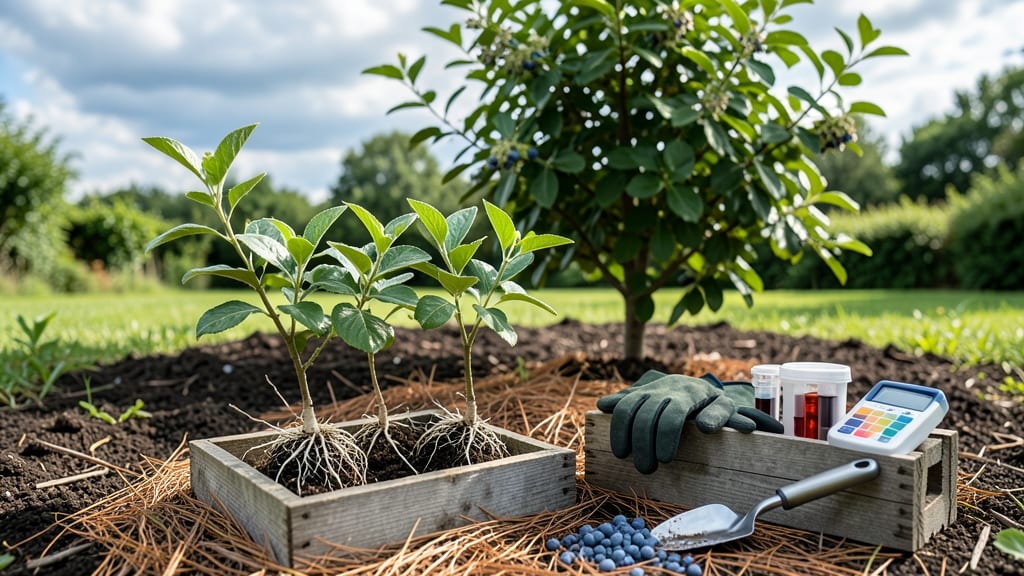
Timing your blueberry 🫐 planting in Utah isn’t just about the calendar—it’s about surviving the 5-7 zone swings between late frosts and scorching summers. Get it wrong, and your bushes might never produce those sweet, plump berries you’re dreaming of.
But here’s the good news: with the right window—April to May for spring or September to October for fall—you can outsmart Utah’s unpredictable climate and set your bushes up for a July-August harvest that’ll make your neighbors jealous.
I’ve seen firsthand how a single week can mean the difference between thriving bushes and sad, frost-nipped failures. That’s why I’m breaking down the exact frost-free deadlines for each Utah microclimate—whether you’re on the Wasatch Front or tucked into a rural valley.
You’ll learn which cold-hardy varieties like ‘Patriot’ or ‘Duke’ handle Utah’s chill best, and how to prep your soil so your blueberries don’t just survive, but thrive.
Let’s cut to the chase: planting too early risks frost damage, while waiting too late might leave your bushes struggling to establish roots before winter. I’ll walk you through 3 simple steps to time it perfectly, from testing your soil’s acidity to choosing the right mulch for Utah’s dry spells.
By the end, you’ll know exactly when to dig in—and why your future blueberry harvest depends on it.
Ready to turn your Utah garden into a blueberry bonanza? The clock’s ticking, and the best time to plant isn’t just a season—it’s a precision window. Let’s get started.
Utah blueberry planting deadlines by USDA zone (7a, 7b, 8a)
Utah’s diverse microclimates mean your blueberry planting timeline depends heavily on your USDA zone and elevation. Most of Utah falls within zones 7a and 7b, with southern areas like St. George in zone 8a.
The key to success? Planting after your average last frost date—typically mid-April for zone 7a and early April for zone 8a.
For bare-root plants, aim for dormant season planting in late fall (October–November) or early spring (March–April). Container-grown blueberries, however, can handle spring planting until early June, giving you more flexibility if your frost date is unpredictable.
Here’s how to calculate your local frost-free window: Check the USDA Plant Hardiness Zone Map for your exact location, then add 2–4 weeks to account for late frosts.
For example, Salt Lake City (zone 7a) averages its last frost on April 15, but planting after May 1 reduces frost risk for young roots.
🌱 Utah Blueberry Planting Deadlines by Zone
| Zone | Last Frost Date | Ideal Planting Window | Bare-Root Flexibility | Container Planting Window |
|---|---|---|---|---|
| 7a (e.g., Ogden, Park City) | April 15–May 1 | April 15–May 15 | October–November or March–April | April 15–June 1 |
| 7b (e.g., Salt Lake City, Provo) | April 1–April 15 | April 15–May 10 | October–November or March–April | April 1–June 1 |
| 8a (e.g., St. George, Cedar City) | March 15–March 31 | March 30–April 30 | November–December or February–March | March 15–May 15 |
If you’re in a mountain microclimate (e.g., Park City or Alta), frost can linger 2–4 weeks later than valley areas. Plant 1–2 weeks after your local nursery recommends for your elevation.
For example, Alta (zone 7a) may not be frost-free until May 1, even if Salt Lake City is safe by April 20.
For fall planting, aim to get roots established 4–6 weeks before the first hard frost (typically October 15 in zone 7a). This gives young plants time to develop root systems before winter dormancy.
In zone 8a, fall planting extends to November, but avoid planting after October 15 to prevent root shock from winter cold.
Pro tip: Use a frost calendar from your local USU Extension office or Almanac for hyper-local accuracy. For example, Logan (zone 7a) often sees late frosts in May, so container plants should stay in pots until May 15.
Remember, soil temperature matters too. Blueberry roots need soil temps above 40°F (4°C) to thrive. Use a soil thermometer to confirm readiness—especially in high-elevation areas where cold soil delays planting.
Once you’ve nailed your planting window, the next step is choosing the right cold-hardy varieties for Utah’s climate. Stay tuned for our next section on the top 5 blueberry varieties that thrive in Utah’s zones!
Top 5 cold-hardy blueberry varieties for Utah gardens
Utah’s variable climate demands low-chill, cold-hardy blueberry varieties that thrive in USDA Zones 7a-8a. The right variety ensures survival through winter and abundant harvests despite Utah’s hot, dry summers. Here are my top 5 picks for Utah gardens, each chosen for disease resistance, drought tolerance, and flavor.
First, ‘Patriot’ stands out as the #1 cold-hardy variety for Utah. Developed by the University of Maine, it handles Zone 4 winters but excels in Utah’s Zone 7-8.
Its large, sweet berries ripen in mid-July, perfect for Utah’s short harvest window. Plus, it’s disease-resistant, a must for Utah’s humid summers.
Next, ‘Top Hat’ is a compact, dwarf variety ideal for small spaces or container growing. Mature bushes reach just 2-3 feet tall, making them perfect for patio gardens or urban yards.
They produce early-season berries (late June) and tolerate drought better than most varieties, a critical trait for Utah’s water restrictions.
For high-yielding bushes, ‘Duke’ is a Southern Highbush variety that thrives in Utah’s warmer microclimates (e.g., St. George or Spanish Fork). It produces 2-3 pounds of berries per plant annually and handles Utah’s alkaline soils better than most varieties when paired with organic amendments.
Don’t overlook ‘Jersey’, a Northern Highbush with exceptional cold hardiness (Zone 5) and large, firm berries. It’s a late-season producer (August), extending your Utah harvest when other varieties fade. Its vigorous growth also makes it great for hedgerows or windbreaks in exposed Utah yards.
Lastly, ‘Bluecrop’ is a classic variety beloved for its sweet-tart flavor and reliable yields. While it prefers cooler climates, it performs well in Utah’s higher elevations (e.g., Logan or Park City). Its medium-sized berries ripen in mid-to-late July, aligning with Utah’s peak summer heat.
| Variety | Cold Hardiness (Zone) | Harvest Time | Size (Mature) | Utah Adaptability |
|---|---|---|---|---|
| Patriot | 4-7 | Mid-July | 6-8 ft | Excellent (disease-resistant) |
| Top Hat | 5-8 | Late June | 2-3 ft (dwarf) | Great for containers/drought |
| Duke | 6-9 | July-August | 5-6 ft | Best for warm microclimates |
| Jersey | 5-7 | August | 6-8 ft | Late-season, wind-resistant |
| Bluecrop | 4-7 | Mid-Late July | 6-8 ft | Best for high elevations |
When selecting varieties, prioritize soil pH compatibility—all these thrive in acidic soil (4.5–5.5). Test your Utah soil first; if it’s alkaline, amend with peat moss or sulfur before planting. For container growing, ‘Top Hat’ or ‘Duke’ are my top picks, as they handle limited root space