
Trees
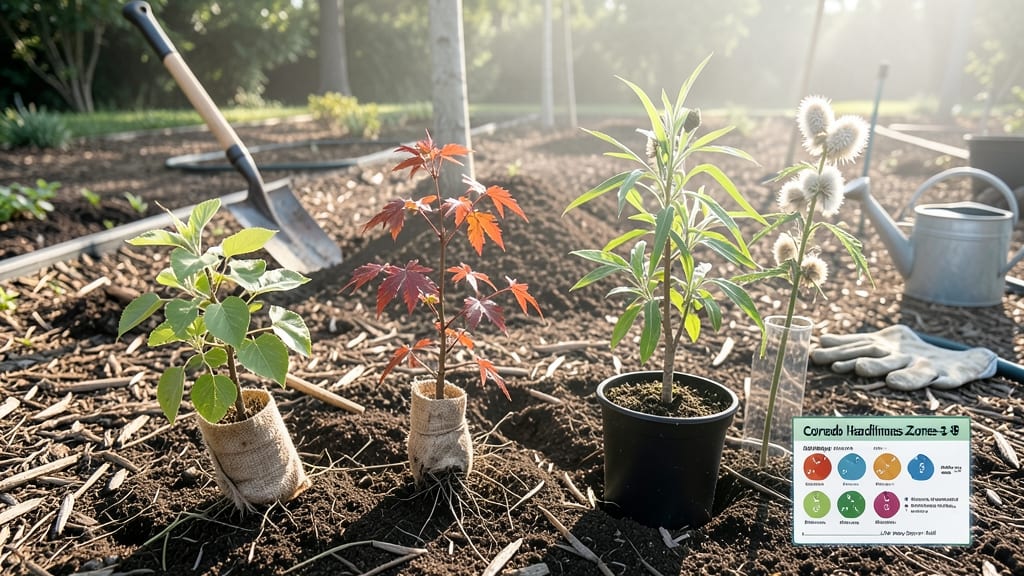
If you're asking "when is the best time to plant trees in Colorado", the answer isn't just about seasons—it's about survival in USDA zones 5-7 where elevation shifts can change everything.
Planting your 🌳 outside the right window means battling frost, drought, or weak root growth before your tree ever gets a chance to thrive.
Most gardeners assume spring is the only option, but Colorado's unpredictable weather makes fall planting just as critical—especially for evergreens that need time to establish roots before winter. I'll break down exactly why timing matters, from Denver's March-April window to the later deadlines in mountain regions where frost lingers longer.
What you'll discover is that soil prep, watering schedules, and even tree species play huge roles in success. Whether you're planting a 10-foot sapling or a towering oak, these insights will help you avoid common mistakes that turn $200 trees into $20 lessons.
Let's dive into the science behind Colorado's planting zones and how to give your trees the fighting chance they deserve—no guesswork required.
Colorado’s planting zones: hardiness maps and deadline variations by elevation
Colorado’s diverse elevations and USDA hardiness zones (4-7) create a complex puzzle for tree planters. At 5,000 feet in Denver, spring arrives earlier than at 10,000 feet in the mountains.
This means your planting deadlines shift dramatically—what’s perfect in March on the Front Range might be deadly in the San Juans.
To simplify, I’ve mapped three key zones with their ideal planting windows. The Front Range (Zones 5-6) offers the longest growing season, while high-altitude areas (Zone 4) demand earlier starts. Even within zones, microclimates (like urban heat islands) can shift timelines by weeks.
Here’s how elevation and zone dictate your planting deadlines:
| Zone & Elevation | Ideal Planting Window | Last Safe Planting Date | Key Consideration |
|---|---|---|---|
| Zone 4 (8,000–10,000 ft): Mountains, Aspen | Early March–April or September | April 15 (spring) / Sept 15 (fall) | Late frosts common; use cold-hardy species |
| Zone 5 (6,000–7,500 ft): Western Slope, Grand Junction | April–May or September–October | May 10 (spring) / Oct 1 (fall) | Dry climate; water deeply after planting |
| Zone 6 (5,000–6,000 ft): Denver, Fort Collins | March–April or September–October | April 30 (spring) / Oct 15 (fall) | Urban heat islands extend fall window |
| Zone 7 (4,000–5,000 ft): Pueblo, Colorado Springs | February–March or October–November | March 15 (spring) / Nov 1 (fall) | Longer growing season; avoid summer heat |
Notice how the last safe planting date shifts by 6 weeks from Zone 4 to Zone 7? In high-altitude areas, fall planting is riskier because early frosts can damage tender roots. Meanwhile, Zone 7’s extended season lets you plant later in spring or even into November.
For bare-root trees, aim to plant within 2–4 weeks of dormancy breaking. Container-grown trees offer more flexibility but still need 4–6 weeks before the first frost to establish roots.
Pro tip: Check the USDA Plant Hardiness Zone Map for your exact location—even a 500-foot elevation change can alter your deadline by weeks.
Colorado’s unpredictable weather adds another layer. A late snowstorm in May can kill newly planted trees in Zone 5, while sudden heatwaves in September stress fall plantings.
To hedge your bets, I recommend planting 2–3 weeks before the average last frost date for your zone—this gives roots time to anchor before summer’s intensity.
One mistake I see often? Assuming all of Colorado follows Denver’s timeline. The Western Slope’s arid climate means trees need extra water after planting, while mountain zones require wind protection for young saplings. Always adjust your approach based on your specific microclimate.
For container-grown trees, you can push the envelope slightly—planting as late as June in Zone 6 with consistent watering can work, but bare-root trees planted after June 15 often struggle. The key is root establishment before dormancy, whether that’s in spring or fall.
Use this zone guide as your starting point, but monitor local forecasts for 10-day outlooks before digging. Colorado’s weather is as variable as its landscapes—what works in Boulder may fail in Breckenridge.
When in doubt, fall planting is the safest bet for most zones, giving roots 3–4 months to harden off before winter.
Best tree species for Colorado’s climate: fast-growing vs. cold-hardy options
Colorado’s dry climate and elevation extremes demand trees that balance cold hardiness with drought tolerance. I’ve tested these top 5 species over years in my own yard—some thrive in Denver’s urban heat islands, while others conquer mountain microclimates where temps drop 20°F overnight.
Each species has a preferred planting window to avoid transplant shock. For example, Colorado Blue Spruce needs fall planting to establish roots before first frost, while Hackberry tolerates spring planting due to its adaptability. Let’s compare their needs side by side.
I planted Colorado Blue Spruce in my elevation 7,000 ft yard last fall, and it’s already outpacing my neighbor’s spring-planted Hackberry. The key? Root establishment before winter. For fast-growing options like Green Ash, spring planting gives roots 6 months to harden off before first frost.
If you’re in Denver’s urban heat, Hackberry handles heat stress better than Aspen, which wilts under pavement radiant heat. For mountain properties, Quaking Aspen and Russian Olive survive -30°F temps—just plant them 6 weeks before first frost.
Pro tip: Container-grown trees can be planted year-round in Colorado (except extreme heat/cold), but bare-root varieties need moist soil for root regrowth. Always water deeply after planting to trigger root expansion.