
Plants
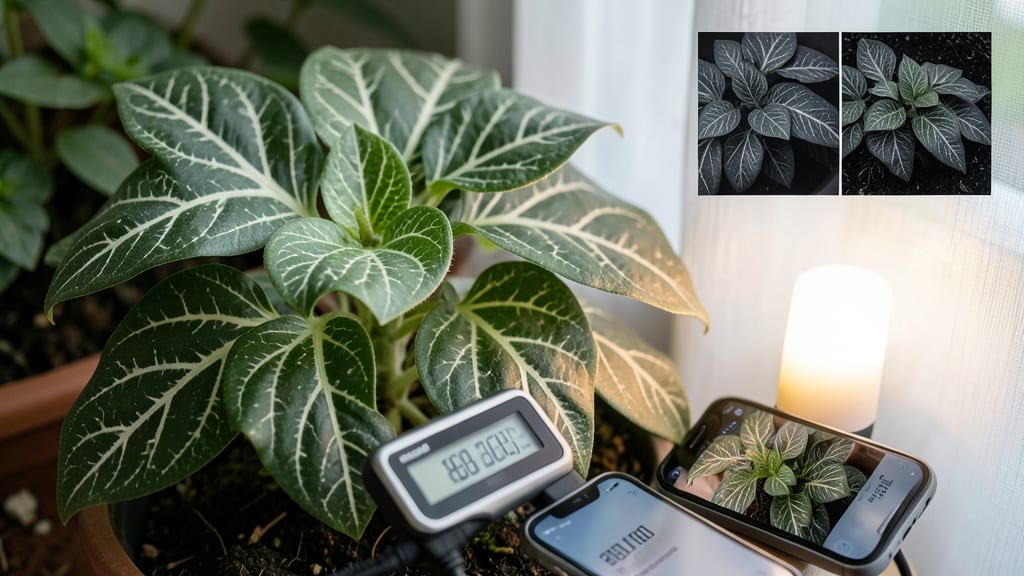
If you’re wondering how much light does a nerve plant need, its signature white veins are the first clue—when they fade or turn yellow, your lighting is likely off. This delicate foliage plant thrives in bright but indirect light; too little dulls its stripes, while too much scorches them.
The key is finding that sweet spot where your plant stays vibrant and healthy year-round.
Most people assume these plants can handle low light, but that’s a common mistake. Without enough brightness, the leaves lose their bold contrast, and the plant stretches awkwardly toward any available light source.
On the flip side, harsh direct sunlight causes crispy edges and bleached patches—neither look is ideal for showcasing your plant’s natural beauty.
In this guide, I’ll break down exactly how much light your nerve plant needs—whether you’re placing it near a north-facing window, under artificial grow lights, or tucked in a dim corner.
You’ll learn how to spot the signs of improper lighting and adjust your setup for optimal growth in any room.
Ready to revive your plant’s striking foliage? Let’s dive into the perfect lighting conditions that’ll keep your nerve plant thriving for years to come.

Ideal light requirements for nerve plant growth and stripe clarity
The nerve plant (Fittonia) thrives in bright indirect light, where its signature white veins remain crisp and vibrant. Too little light causes the stripes to fade, while too much direct sun bleaches or burns the delicate foliage.
Aim for 4-6 hours of filtered sunlight daily, mimicking its natural understory habitat.
Think of your nerve plant’s light needs like a goldilocks zone—not too dim, not too harsh. South-facing windows are risky unless you use a sheer curtain to diffuse the intensity. East or north-facing windows provide the perfect balance for these tropical beauties.
🌱
| Light Condition | Daily Hours | Stripe Clarity | Growth Impact |
|---|---|---|---|
| Bright Indirect | 4-6 hours | Sharp, vibrant | Optimal growth |
| Low Light | <2 hours | Faded stripes | Leggy, sparse |
| Direct Sun | >6 hours | Bleached/white | Burnt edges |
| Artificial Grow Light | 6-8 hours | Maintained | Healthy indoors |
Seasonal adjustments are key. During winter months, when natural light dims, supplement with a 12-inch LED grow light for 6 hours daily. Place it 12-18 inches above your plant to avoid heat stress. In summer, move plants 3 feet back from south-facing windows to prevent leaf scorch.
For stripe clarity, position your nerve plant where it receives morning sun and afternoon shade. The white veins contain chlorophyll that thrives in moderate light—too little, and they lose their definition. Too much, and the plant’s photosynthesis process gets overwhelmed, causing stress.
Pro tip: Rotate your plant quarter-turn weekly to ensure even light exposure. This prevents lopsided growth and keeps those stunning veins symmetrical. A simple 180-degree flip every month works wonders for balanced development.
If you notice yellowing leaves or crispy edges, it’s a cry for help—either too much sun or underwatering. Move the plant to a shadier spot immediately and check soil moisture.
For pale, stretched leaves, it’s begging for more light. Gradually introduce brighter conditions over 1-2 weeks to avoid shocking the plant.
🌿
Remember, nerve plants are tropical understory dwellers, so they mimic the dappled light of a forest floor. Recreate this by placing them near east-facing windows or under sheer curtains on south-facing windows. With the right light, your nerve plant will reward you with bold, striped foliage year-round.
Ideal light requirements for nerve plant growth and stripe clarity
Your nerve plant (Fittonia) thrives in bright indirect light, where its signature white veins pop against deep green leaves. This light level mimics its natural understory habitat in tropical forests, where dappled sunlight filters through canopies.
Without enough light, those stunning stripes fade to pale green, while too much causes crispy edges and bleached patches.
The perfect balance is 4-6 hours of bright indirect light daily. Think of it as the golden hour for your plant—similar to morning sun near an east-facing window or filtered afternoon light through sheer curtains.
Artificial grow lights (6,500K color temperature) can supplement if natural light falls short during winter months.
🌿
| Light Condition | Intensity Level | Stripe Visibility | Growth Impact |
|---|---|---|---|
| Bright Indirect Light | 60-80% | Vibrant stripes | Healthy, compact growth |
| Low Light | 20-40% | Faded stripes | Leggy, sparse growth |
| Direct Sunlight | 100% | Bleached stripes | Crispy edges, yellowing |
Seasonal adjustments are key. During winter months, when daylight weakens, rotate your plant quarter-turns weekly to ensure even light exposure. In summer, shield it from harsh afternoon sun by moving it 3 feet back from south-facing windows or using sheer curtains to diffuse intensity.
For artificial lighting, LED grow bulbs placed 12-18 inches above your plant provide consistent results. Aim for 12-14 hours of light daily during winter to maintain stripe clarity. Test placement by observing leaf color—if stripes darken, you’ve hit the sweet spot!
Pro tip: Group your nerve plant with other low-to-medium light plants like pothos or peace lilies. They’ll signal when light needs adjusting—if their leaves also fade, it’s time to move closer to a brighter spot.