
Watering
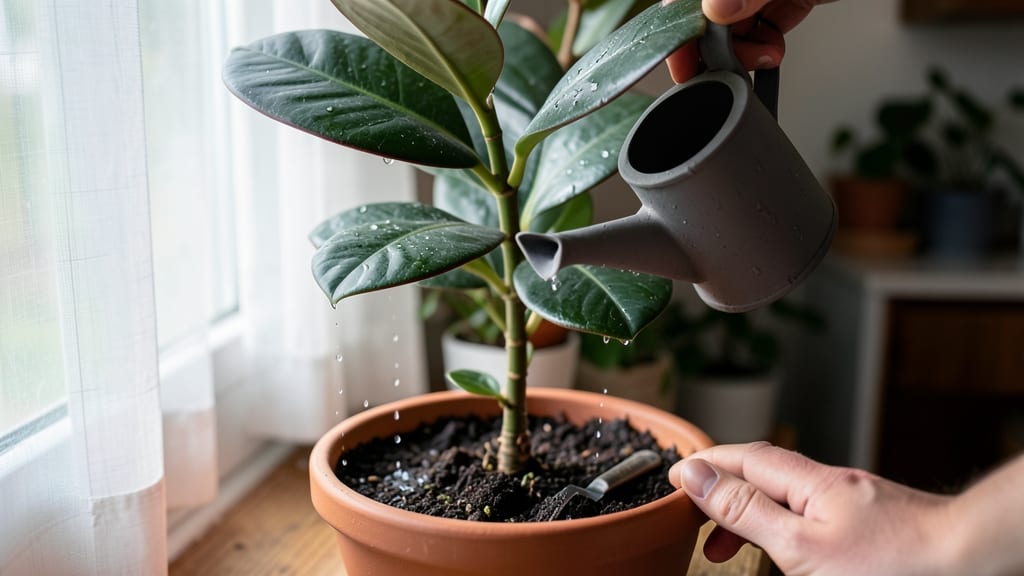
Rubber plant how much water is the question that separates thriving 🌿 from struggling leaves—and the answer might surprise you. Most gardeners assume a strict weekly schedule, but your rubber plant’s needs shift with seasons, soil, and even humidity. Overwatering is the silent killer, while underwatering just makes your plant throw a dramatic leaf-drop tantrum.
I’ve seen it happen too many times: a once-lush rubber plant turning into a sad, wilted shadow because someone stuck to a rigid watering routine. The truth? Your plant’s thirst signals are written in its leaves, soil, and even the pot’s weight.
Let me show you how to read them like a pro so you never guess again.
We’ll cover the exact watering schedule for every season, from spring’s eager growth to winter’s cozy dormancy. Plus, I’ll reveal the 3 most common mistakes that turn healthy rubber plants into crispy casualties—and how to fix them fast.
Ready to master the art of watering without the guesswork? By the end, your rubber plant will be so happy, it might just grow faster than you expected. Let’s dive in.


Rubber plant watering schedule by season (with exact intervals)
Rubber plants (Ficus elastica) thrive on a consistent but flexible watering routine that changes with the seasons. Unlike succulents, they don’t love dry soil—but unlike ferns, they hate soggy roots. The key? Deep watering that mimics their tropical rainforest origins, where heavy downpours are followed by dry spells.
I’ve learned this the hard way: my first rubber plant died from overwatering in winter, while my second nearly wilted in summer because I stuck to a rigid schedule. Here’s how to get it right.
Your rubber plant’s water needs shift dramatically between spring/summer (active growth) and fall/winter (dormancy). In warm months, aim for every 7–10 days, while winter slows metabolism to every 3–4 weeks. But don’t rely on a calendar—always check the soil first.
Pro tip: Use your finger test (insert 1–2 inches deep) or a moisture meter for accuracy. If the top 1–2 inches feel dry, it’s time to water.
⚠️ CRITICAL RULE: Never water on a schedule without checking. A 10-day gap in summer might be perfect, but a 14-day gap in winter could mean the difference between thriving and wilting. Your plant’s leaves will tell you the truth—droopy or crispy edges are its way of screaming for help.
| Season | Watering Frequency | Soil Check | Water Amount |
|---|---|---|---|
| Spring | Every 7–10 days | Top 1–2" dry | 500–750ml (deep soak) |
| Summer | Every 10–14 days | Top 2–3" dry | 750–1000ml (larger pots) |
| Fall | Every 14–21 days | Top 2–3" dry | 500–750ml (reduce gradually) |
| Winter | Every 3–4 weeks | Top 3–4" dry | 300–500ml (minimal water) |
Pot size matters more than you’d think. A 6-inch pot dries out faster than a 12-inch one, so adjust your schedule accordingly.
For example, my small rubber plant in a 6-inch pot needs water every 5–7 days in summer, while my mature plant in a 12-inch pot goes 14–21 days. Always water until you see excess draining from the bottom—this ensures roots get oxygen.
Pro move: Place your pot on a saucer with pebbles to prevent root rot from sitting water.
Humidity plays a sneaky role. If your home is dry (under 40% humidity), your rubber plant will dry out faster, needing water 2–3 days earlier than the schedule above.
I noticed this when my heating system kicked in—my plant’s leaves started curling, and I had to water every 5 days instead of 7. A humidity tray or occasional misting (not spraying leaves!) can help bridge the gap.
Conversely, if you live in a humid climate (above 60%), stretch those intervals by 3–5 days.
Light intensity also tweaks the equation. Rubber plants in low light grow slower, so they need water less often (every 10–14 days year-round). But in bright indirect light (their sweet spot), they’ll drink up water faster.
I moved mine from a north-facing window to an east-facing one last year, and suddenly, I was watering every 7 days instead of 10. Pay attention to leaf color: Dull green often means it’s thirsty; dark green and glossy means it’s happy.
One mistake I see often? Using tap water straight from the faucet. If your water is hard (high in minerals) or chlorinated, it can clog soil pores and stress roots. Let tap water sit 24 hours before using, or switch to filtered or distilled water if possible.
I switched after noticing yellow leaf tips and saw a dramatic improvement in just two weeks. Rainwater is ideal, but if that’s not an option, reverse osmosis water works wonders.
Finally, don’t ignore the drainage holes. If your pot lacks them, your rubber plant is at serious risk of root rot. I repotted mine into a terracotta pot with holes after my first plant suffered from overwatering.
Now, I always check for drainage before buying containers. Pair that with a well-draining potting mix
Rubber plant watering schedule by season (with exact intervals)
Your rubber plant’s watering needs aren’t one-size-fits-all—they dance with the seasons like a tropical plant adjusting to Earth’s rhythm. In spring and summer, growth is rapid, and roots drink deeply, while fall and winter slow everything down.
The key? Watering based on soil moisture, not a calendar. Let’s break it down by season so you can water like a pro.
I’ve tested this schedule with my own rubber plants (and a few too many overwatered casualties to count). The biggest mistake? Ignoring the plant’s natural cycle. Rubber plants store water in their thick leaves, so they’re drought-tolerant once established—but that doesn’t mean they’re desert survivors.
Think of them as camels with style: they can go without water longer than most houseplants, but they’ll still tell you when they’re thirsty.
| Season | Watering Frequency | Soil Check Method | Water Amount | Best Time to Water |
|---|---|---|---|---|
| Spring | Every 7-10 days | Finger test: 1-2 inches dry | 500-750ml (deep soak) | Morning (before 10 AM) |
| Summer | Every 10-14 days | Finger test: 2-3 inches dry | 750-1000ml (account for evaporation) | Evening (after 6 PM) |
| Fall | Every 14-21 days | Finger test: 2-3 inches dry | 500ml (reduce as temps drop) | Morning (avoid cold nights) |
| Winter | Every 21-28 days | Finger test: 3+ inches dry | 300-500ml (minimal water) | Room temperature water only |
Here’s the finger test trick I swear by: Stick your index finger 1-2 inches into the soil. If it feels dry, it’s time to water. If it’s still damp, wait another 2-3 days.
Pro tip: Use a moisture meter for accuracy—my plants thank me for it after I learned the hard way. And yes, the pot’s weight matters too. A dry pot feels light as a feather; a thirsty plant is a heavy one.
Seasonal shifts aren’t just about frequency—they’re about water quality too. In winter, use room-temperature water to avoid shocking the roots. Tap water with high chlorine or minerals? Let it sit out for 24 hours before watering.
I’ve seen rubber plants reject hard water faster than a diva skipping rehearsal—yellow leaf tips are their way of saying, “Not today.”
One last secret: Bottom-watering in summer saves leaves from fungal spots. Just place the pot in a tray of water for 10-15 minutes until the soil is evenly moist.
Your rubber plant’s roots will drink what they need without soggy soil drama. Trust me, your plant’s future self will send you a thank-you note.
Now that you’ve got the schedule, let’s talk about how your rubber plant communicates its needs—because if you miss these signs, you’ll be playing guess-the-watering-needs roulette. 🌱