
Plants
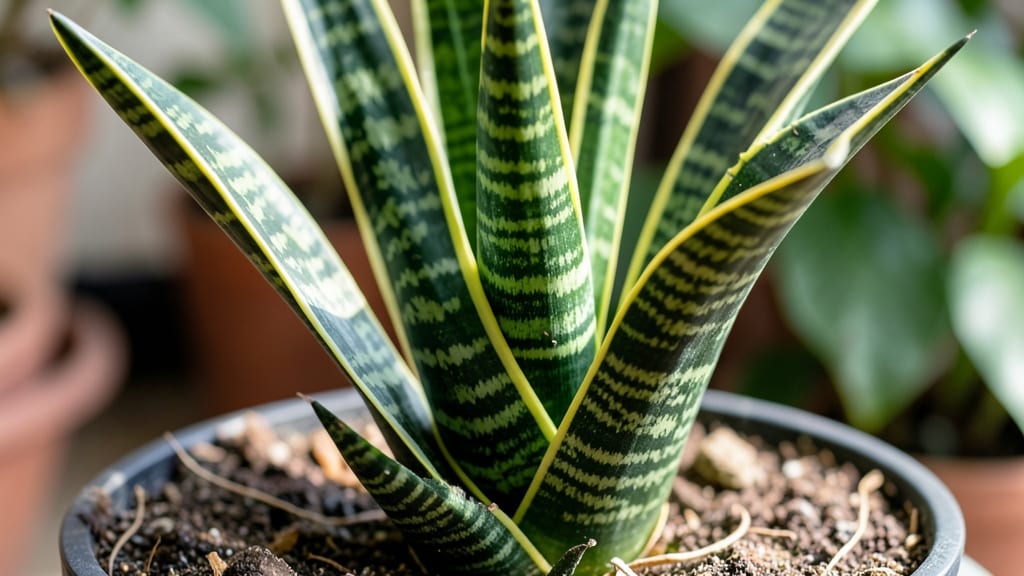
If you’ve ever wondered how much light does a snake plant require to survive in nearly any corner of your home—only to suddenly develop sad, stretched leaves—you’re not alone.
The truth is, these resilient plants are masters of adaptability, but they do have light preferences that can make or break their health.
Most people assume snake plants need bright light to thrive, but the reality is far more flexible. They happily grow in low-light conditions, making them perfect for offices or dimly lit rooms.
However, when placed in the right amount of bright, indirect light, they’ll reward you with faster growth and those signature bold stripes. The key is finding that sweet spot where they’re neither struggling nor scorched.
In this guide, I’ll break down exactly how much light your snake plant needs—from the dimmest corners to the sunniest spots—and how to spot when you’ve got it just right (or completely wrong).
You’ll learn where to place yours for optimal health, whether you’re working with a north-facing window or artificial lighting.
By the end, you’ll know exactly how to give your snake plant the perfect light conditions so it keeps looking lush, vibrant, and ready to purify your air for years to come. Let’s get started!

Ideal light requirements for snake plants: low to bright indirect light explained
Snake plants (Sansevieria trifasciata) are famous for their low-light tolerance, but that doesn’t mean they thrive in darkness. These hardy plants actually prefer bright indirect light, which encourages healthy growth and vibrant foliage.
The key is finding that sweet spot between too little and too much light—where your snake plant can flourish without stress.
In nature, snake plants grow in shaded African grasslands, where they adapt to dappled sunlight and partial shade. This explains why they handle indoor conditions so well, from dim offices to sunlit living rooms.
However, pushing them into direct sunlight or deep shade can lead to problems like stretched leaves or yellowing tips, so understanding their light needs is crucial.
Most experts recommend 100–1,000 foot-candles of light for optimal growth. To put that into perspective, a north-facing window typically provides 200–500 foot-candles, while a south-facing window can reach 1,000+ foot-candles—though snake plants rarely need the latter.
You can measure your space’s light with a light meter or use the shadow test: hold a white piece of paper near your plant. If the shadow is faint, the light is likely bright enough.
| Light Condition | Foot-Candles | Growth Impact | Ideal For |
|---|---|---|---|
| Low Light | 50–200 | Slow growth, pale leaves | Offices, bathrooms |
| Medium Light | 200–500 | Healthy, compact growth | Living rooms, kitchens |
| Bright Indirect | 500–1,000 | Vibrant leaves, faster growth | East/west windows |
| Direct Sunlight | 1,000+ | Brown tips, leaf burn | Avoid (south windows) |
While snake plants can survive in low light, they’ll grow slower and develop longer, thinner leaves as they stretch toward any available light source. This phenomenon, called etiolation, is a red flag that your plant isn’t getting enough light.
On the flip side, too much direct sunlight can cause leaf scorch, visible as brown or crispy edges. The solution? Place your snake plant 3–6 feet away from a window to filter harsh rays, or use a sheer curtain to diffuse light.
Artificial lighting can also work if natural light is scarce. LED grow lights with a cool white spectrum (5,000–6,500K) are ideal, and you’ll need 12–14 hours of light per day to mimic optimal conditions.
Position the light 6–12 inches above the plant and adjust the height as it grows. This setup is perfect for office plants or winter care when daylight is limited.
Pro tip: Rotate your snake plant every 4–6 weeks to ensure even light exposure. Since they grow toward the brightest source, one side can become leggy while the other stays compact.
A slow quarter-turn keeps their shape balanced and encourages uniform growth. This is especially useful if your plant sits near a single window.
Outdoor snake plants can handle partial shade but avoid placing them in full shade for extended periods. If you’re growing them outside in USDA Zone 6a or warmer, choose a spot with morning sun and afternoon shade to prevent leaf damage.
In containers, you can move them indoors during peak summer heat to protect them from intense sunlight.
Remember, snake plants are forgiving, but they’ll always reward you with healthier growth when given the right light. Start with medium indirect light, monitor their response, and adjust as needed.
With the right conditions, your snake plant will thrive for years with minimal effort—making it the perfect low-maintenance houseplant.
Ideal light requirements for snake plants: low to bright indirect light explained
Snake plants (Sansevieria) are famous for their light flexibility, but that doesn’t mean they thrive in any lighting. The sweet spot for these plants falls between low light and bright indirect light, with an ideal range of 100–1,000 foot-candles.
This range covers everything from dim offices to sunlit rooms with filtered sunlight—no harsh midday sun required!
In low light (under 500 foot-candles), your snake plant will survive but grow slowly, with leaves stretching toward any available light (a condition called etiolation). On the other hand, bright indirect light (500–1,000 foot-candles) encourages faster growth, richer colors, and those coveted bold stripes.
Think of it like Goldilocks—too little light, and it’s sad and leggy; too much direct sun, and it gets sunburned.
To measure your space’s light, use a light meter app (like Light Meter by Blue Light Analyzer) or observe nearby plants. A north-facing window typically provides 200–500 foot-candles, while a south-facing window can exceed 1,000 foot-candles—always use a sheer curtain to diffuse harsh rays.
Artificial grow lights (like LED full-spectrum bulbs) are a great backup for rooms with no natural light.
If your snake plant is in a low-light spot, it’ll still live but may develop long, thin leaves as it stretches for light. To fix this, rotate the pot quarter-turns every 2–3 weeks to encourage even growth.
For plants in bright indirect light, you’ll notice shorter, thicker leaves with deeper green or yellow stripes—a sign it’s thriving! Just avoid placing it in direct midday sun, which can scorch the tips.
Pro tip: Snake plants in bright indirect light can handle slightly more water (but still drought-tolerant—never soggy soil!). In low light, reduce watering to every 4–6 weeks to prevent root rot.
The key is balancing light and moisture—too much of either will stress your plant, while the right combo keeps it happy for years.
Remember, snake plants are not fussy, but they do reward attentive care. Start by placing yours near a north-facing window or under a grow light for 12–14 hours a day.
Monitor its leaves for color changes, and adjust placement as needed. With the right light, your snake plant will stay lush, upright, and ready to purify your air—no green thumb required!