
Plants
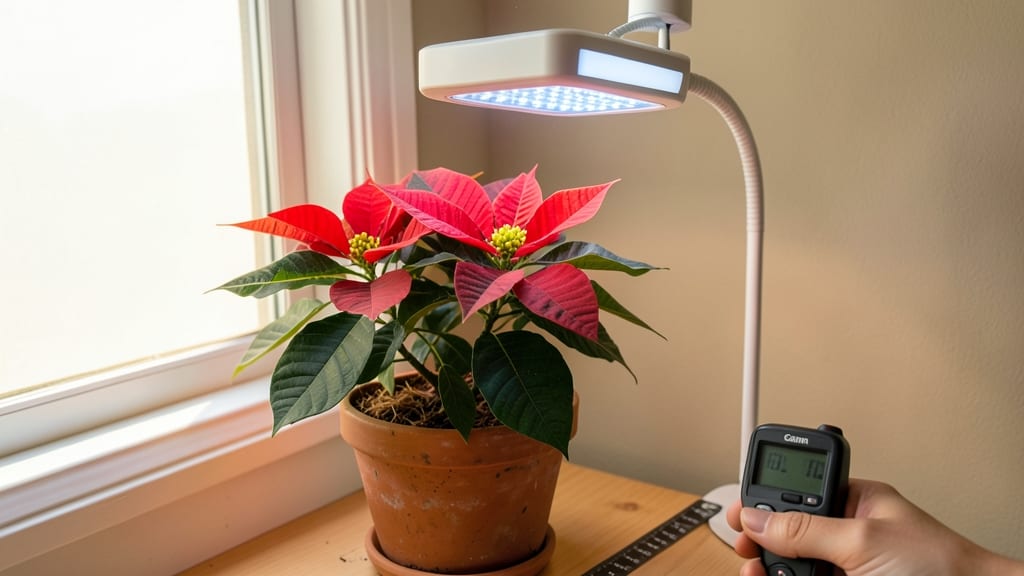
If your 🎄 poinsettia plant needs the right amount of light to keep its vibrant holiday glow, the answer might be simpler than you think—it’s all about how much light does a poinsettia plant need.
Too little light means pale, sad leaves, while too much direct sun can bleach those stunning red bracts before the season even begins. The sweet spot? Bright, indirect light for 6+ hours daily, but there’s more to it than just placement.
You don’t need to be a plant scientist to get this right. Poinsettias thrive near east or west-facing windows where sunlight filters gently, mimicking their natural tropical habitat. But what if your home only has north-facing windows or dim lighting?
I’ll show you how to adjust—whether it’s tweaking your plant’s spot or adding a simple grow light to keep those colors popping until New Year’s.
Here’s the game-changer: understanding the difference between vegetative growth (when your poinsettia is building leaves) and flowering stage (when those bracts turn bold). A few small changes in light exposure at the right time can mean the difference between a few weeks of color and months of holiday cheer.
Let’s break it down so your poinsettia stays showstopping all season long.
Ready to troubleshoot? We’ll cover how to spot light-related issues—like leggy stems or faded bracts—and fix them fast, plus the best artificial lighting setups for low-light homes. Your 🎄 poinsettia’s future depends on it, and it’s easier than you’d expect!

Ideal light requirements for poinsettia growth and color intensity
Poinsettias thrive in bright indirect light, mimicking their natural understory habitat in Mexico. Without the right light, their signature red bracts fade to pale yellow or green, and growth becomes leggy. The key is balancing 6-8 hours of light daily while avoiding harsh direct sunlight that scorches leaves.
During the vegetative growth stage (spring to early fall), poinsettias need slightly more light to build strong stems. Once they enter the floral induction phase (late summer to fall), they require 12-14 hours of darkness daily to trigger bract color development.
This photoperiodic response is why your Christmas poinsettia needs consistent light exposure.
For optimal color intensity, aim for 1,000-2,000 foot-candles of light (measured 12 inches from the plant). A north-facing window typically provides 500-1,000 foot-candles, while east or west windows offer the ideal 1,000-2,000 foot-candles. South-facing windows can exceed 3,000 foot-candles, requiring sheering or filtering.
| Growth Stage | Light Type | Duration | Foot-Candles | Bract Color Impact |
|---|---|---|---|---|
| Vegetative (Spring-Fall) | Bright Indirect | 6-8 hours | 1,000-2,000 | Green leaves, strong stems |
| Flowering (Fall-Winter) | Bright Indirect | 6-8 hours | 1,500-2,000 | Vibrant red/pink bracts |
| Dormancy (Winter-Spring) | Moderate Light | 4-6 hours | 500-1,000 | Leaf retention, minimal growth |
Poinsettias respond best to natural daylight spectrum, particularly the blue and red wavelengths (400-500nm and 600-700nm) that drive photosynthesis and pigment production. If your home lacks natural light, supplement with full-spectrum LED grow lights placed 6-12 inches above the plant for 12-14 hours daily during growth stages.
Watch for light stress signs like yellowing leaves or crispy edges, which indicate too much direct sun. Conversely, pale green leaves and stretched stems signal insufficient light. Rotate your poinsettia quarter-turns weekly to ensure even growth and prevent lopsided development.
In low-light conditions, poinsettias may still grow but produce smaller, less vibrant bracts. If you notice yellowing leaf margins, move the plant 3-6 inches closer to the light source or increase supplementary lighting by 2-3 hours daily.
Remember, poinsettias are short-day plants, so consistent light exposure is critical for triggering their holiday colors.
For outdoor poinsettias (in warm climates), provide morning sun and afternoon shade to prevent leaf scorch. Bring them indoors before temperatures drop below 50°F, as cold drafts stress the plant and reduce bract vibrancy.
Pro tip: Use a light meter app (like "Light Meter" for iOS) to monitor foot-candle levels. Aim to maintain 1,500 foot-candles during active growth for the most dramatic bract colors by Christmas.
🎄
Ideal light requirements for poinsettia growth and color intensity
Poinsettias thrive in bright indirect light, mimicking their natural understory habitat in Mexico. Too little light causes pale bracts and leggy stems, while direct sun scorches their delicate leaves. The key is 6-8 hours of filtered sunlight daily, achieved through sheer curtains or placement near east/west-facing windows.
During the vegetative stage (spring-summer), poinsettias tolerate moderate light but grow slower. For color development (fall-winter), increase light exposure to 12-14 hours daily—this triggers the photoperiodic response that produces vibrant bracts. Artificial grow lights can supplement natural light in dim homes.
🌱Pro Tip: Rotate your poinsettia weekly to ensure even light exposure. Uneven lighting causes lopsided growth, where one side stretches toward the light source.
| Growth Stage | Light Requirement | Duration | Bract Color Impact |
|---|---|---|---|
| Vegetative (Spring-Summer) | Bright indirect light (50-60%) | 6-8 hours | Green foliage development |
| Flowering (Fall-Winter) | Bright indirect light (60-70%) | 12-14 hours | Vibrant red/pink bracts |
| Dormant (Late Winter) | Low light (30-40%) | 4-6 hours | Rest period for next season |
Poinsettias need 12-14 hours of darkness daily to trigger bract coloration. Avoid leaving them under artificial lights at night, as this disrupts the photoperiodic response. Use blackout curtains or move them to a dark closet for 14 hours each night starting in October to encourage vibrant colors.
For low-light conditions, supplement with a 15W LED grow bulb placed 12 inches away for 10-12 hours daily. Avoid incandescent bulbs—they generate too much heat and can scorch leaves. Test your light setup with a light meter app to ensure 500-1000 foot-candles of brightness.
🌿Watch Out: South-facing windows often provide too much direct sun, especially in summer. Use a sheer white curtain to diffuse light while maintaining brightness. North-facing windows may be too dim—consider a reflective surface like a mirror behind the plant to bounce extra light.
In outdoor settings, poinsettias can handle partial shade (30-50% shade cloth) during summer heat. However, they’re not frost-tolerant—bring them indoors before temperatures drop below 50°F (10°C). A cool indoor spot (60-70°F) with bright light mimics their natural tropical climate.