
Planting
Knowing when to plant your garden in Michigan can mean the difference between a bountiful harvest and a sad, frost-killed disappointment. Michigan’s climate throws curveballs with its unpredictable springs, making timing everything for vegetables, flowers, and perennials alike.
I’ve gardened here for years, and the key is understanding your USDA zone—whether you’re in the Upper Peninsula or southern Michigan—and tracking frost dates like a pro. Plant too early, and a late frost will nip your seedlings in the bud; too late, and you’ll miss the growing window entirely.
This guide will walk you through the exact planting windows for your region, from cool-season crops like spinach to heat-lovers like tomatoes. You’ll also learn how to adjust for Michigan’s quirks, like using row covers or leveraging microclimates for earlier starts.
Ready to turn your gardening dreams into reality? Let’s dive into the frost-free deadlines and strategies that actually work for Michigan gardeners—no more guesswork, just green thumbs ahead.
Michigan’s frost-free dates by USDA hardiness Zone: when to plant cool vs warm season crops
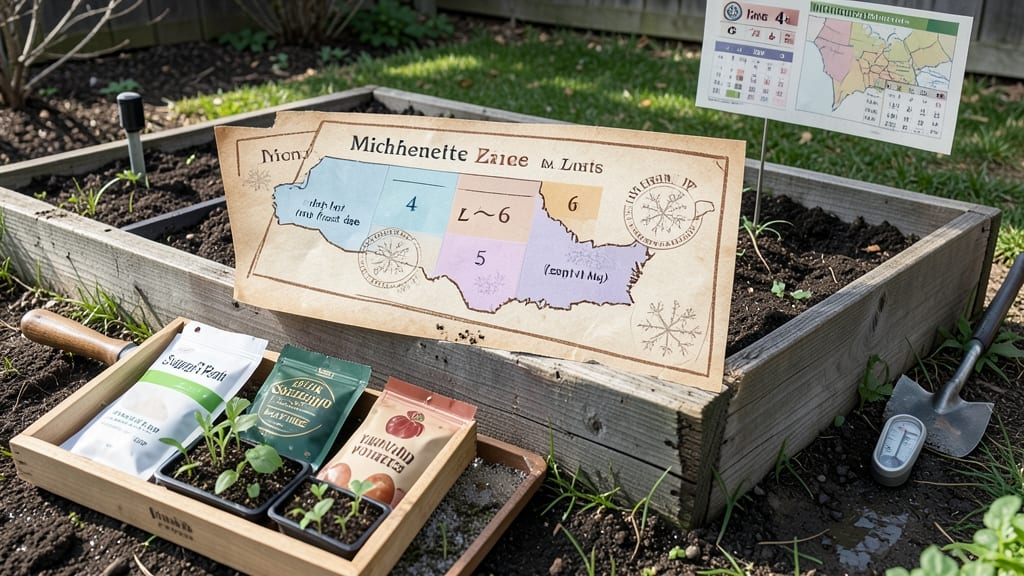
Michigan spans USDA Hardiness Zones 4-6, with dramatic differences between the Upper Peninsula (Zone 4) and Lower Peninsula (Zones 5-6). These zones dictate your last frost dates, which separate cool-season crops (like spinach and peas) from warm-season plants (like tomatoes and peppers).
For example, in Zone 5 (Southern Michigan), the average last frost is April 20th, while Zone 4 (Northern Michigan) often waits until May 10th.
Cool-season crops thrive when planted 4-6 weeks before your last frost date, while warm-season crops need soil temperatures above 60°F—typically 2-4 weeks after your last frost.
In Zone 6 (Southwest Michigan), you might plant tomatoes by May 1st, but in Zone 4 (Upper Peninsula), wait until May 25th to avoid frost damage.
Here’s a quick reference for Michigan’s frost-free windows by zone, including cool-season starters and warm-season essentials:
| Zone | Avg. Last Frost | Cool-Season Plants (Start) | Warm-Season Plants (Transplant) |
|---|---|---|---|
| Zone 4 (Upper Peninsula) | May 10 | Peas (March 20), Lettuce (April 1), Spinach (April 15) | Tomatoes (May 25), Peppers (June 1) |
| Zone 5 (Northern Lower Peninsula) | April 20 | Peas (March 1), Lettuce (March 25), Spinach (April 10) | Tomatoes (May 10), Peppers (May 20) |
| Zone 6 (Southern Lower Peninsula) | April 10 | Peas (February 28), Lettuce (March 20), Spinach (March 25) | Tomatoes (April 25), Peppers (May 5) |
*Dates are averages—check local forecasts for adjustments!
For precision planting, use the 14-21 day rule: If you buy seedlings (like tomatoes or peppers), plant them 2 weeks before your last frost date if using row covers.
For direct-sown seeds (like beans or cucumbers), wait until soil temperatures hit 60°F—usually 2-4 weeks after your last frost.
Michigan’s Upper Peninsula faces longer winters and shorter growing seasons, so prioritize fast-maturing varieties (like bush beans or radishes) over slow growers (like artichokes).
In Southern Michigan (Zone 6), you can squeeze in two harvests of warm-season crops by planting early varieties in May and late varieties in July.
Don’t rely solely on USDA zones—Michigan’s microclimates (like urban heat islands or south-facing slopes) can shift planting windows by 1-2 weeks. For example, Detroit’s city center may warm up 5-7 days earlier than rural areas 30 miles north.
Use a soil thermometer ($10 at garden centers) to confirm readiness for warm-season crops.
Pro tip: Track your local frost dates for 3 years to spot trends. The National Weather Service and Michigan State University Extension offer free frost date maps updated annually. Bookmark these before your planting season starts!
For container gardening (common in Zone 4), warm-season crops like peppers can be planted 2 weeks earlier than in-ground plants because containers heat up faster. Just ensure pots have drainage holes to prevent root rot from Michigan’s spring rains.
Finally, succession planting is key in Michigan’s short season. After harvesting early peas or lettuce, replant with fast-growing radishes or bush beans to stretch your harvest into late summer or early fall. This technique adds 3-4 weeks to your growing window without extending the season.
🌱
How to adjust planting times for Michigan’s unpredictable weather: extending the growing season
Michigan’s unpredictable frost dates can leave gardeners scrambling, but smart adjustments let you plant earlier or later than traditional timelines. The key is understanding how to extend your growing season using proven techniques that work in our climate.
I’ve used these methods myself to push my planting windows by 2-4 weeks without risking frost damage.
One of my favorite tricks is succession planting, where I stagger plantings every 2-3 weeks for crops like lettuce and spinach. This ensures a continuous harvest while minimizing frost risk.
For example, if your last frost is typically May 15, I’ll plant a first batch of lettuce on April 20 (using row covers) and follow up with more every 10 days.
🌱
Another game-changer is the 14-21 day rule for transplanting seedlings. If you start peppers indoors on March 1, don’t move them outside until April 15-22, even if the soil looks warm. Young plants need time to harden off and develop roots that can handle Michigan’s temperature swings.
For container gardening, which is perfect for urban Michigan gardeners, I’ve found that pots warm up faster than in-ground soil. This means you can plant warm-season crops like basil 7-10 days earlier than traditional timelines. Just use black containers to absorb more heat.
Finally, always check your soil temperature—not just air temperature. Use a soil thermometer (they’re cheap!) to confirm when it’s 50°F+ for cool crops and 60°F+ for warm crops. I’ve seen air temps hit 70°F while soil stayed at 45°F—planting too soon in those conditions leads to stunted growth.
☀️